
Good air quality does not mean the environment is clean: what the Gospić case actually shows
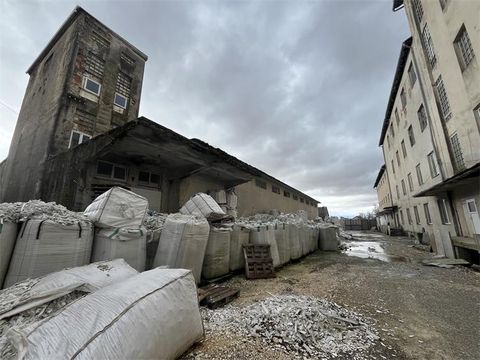
The illegally dumped waste case in Gospić has raised several different questions at once: what is in the waste, whether groundwater has been contaminated, whether public drinking water is safe, what food testing shows, and whether any of this can be seen on an air-quality map. On 22 September, Croatian authorities presented a remediation plan for the site, where an estimated 44,000 tonnes of hazardous and non-hazardous waste are present in total. The remediation is divided into four phases, with almost 33,000 tonnes consisting of buried waste mixed with soil and stone.[1]
The case is a useful reminder that environmental quality cannot be reduced to a single number. Good air quality at a monitoring station can mean that the pollutants being monitored are not elevated at that moment, but it does not tell us whether groundwater, soil or food is free from contamination.
What do we currently know about Gospić?
On 9 September, USKOK published documentation related to PFAS analysis of waste from the Bilajska 50 site as part of an investigation involving suspected environmental and economic offences.[2] The Croatian Institute of Public Health reported that PFAS compounds were found in waste and in groundwater from piezometers close to the site, while analysed samples from the public water supply had not shown PFAS above the analytical determination threshold.[7]
By 22 September, HZJZ had reported a total of 111 analysed samples from the public water supply. All analysed samples met health-safety requirements, and PFAS compounds were not detected above the determination limit in any of them.[3]
On 17 September, HZJZ also published results from testing locally produced food in Gospić. Thirty-two samples from 13 locations were analysed, and the institute said the results did not indicate widespread contamination of locally produced food associated with the waste site.[4] One aronia sample exceeded the permitted cadmium level, but HZJZ stated that the available evidence did not justify linking that result to the illegal waste site.[4]
The remediation issue nevertheless remains open. The plan divides the work into four phases. Temporary covering of the buried waste has already begun, a contractor has been selected to remove and incinerate abroad around 4,500 tonnes of hazardous waste scattered near the silo, while procurement is being prepared for the remediation of almost 33,000 tonnes of buried waste.[1]
Where does air quality fit into this?
AQI is an air-quality index. On AirQuality.city, the overall AQI is based on PM2.5 and PM10, with the less favourable of the two components determining the displayed result.[5] Some official stations also publish NO₂, O₃, SO₂ and CO, but AirQuality.city currently shows those pollutants separately rather than including them in its overall AQI.[6]
A very good AQI therefore cannot answer whether PFAS is present in groundwater, whether metals are present in soil or whether food contains a particular contaminant. An air-quality station is not a laboratory for water or soil, just as a tap-water analysis cannot tell us the current PM2.5 concentration outside.
For environmental incidents, the first question should always be what is actually being measured. Suspected groundwater contamination requires water sampling. Suspected food contamination requires analysis of the relevant food. Smoke, dust and airborne emissions require air-quality measurements.
Can a waste site still affect the air?
Yes, depending on what is happening at the site. Surface dust, fires, evaporation of certain substances or remediation work can create airborne emissions. But the mere presence of contaminated waste does not mean that a standard air-quality station will automatically detect the problem.
A station can only measure pollutants for which it has the appropriate instruments. A PM2.5 and PM10 sensor can detect changes in airborne particle concentrations, but the PM value alone cannot identify their chemical composition or prove that they came from one particular site.[5]
The same applies to gaseous pollutants. An official station measuring NO₂ or SO₂ is not measuring every possible chemical compound that may exist in the environment.[6]
Why is one good reading not enough?
Air pollution varies in both space and time. A monitoring station represents its own location, while concentrations change with wind, precipitation, local sources and time of day. One good hourly reading cannot prove that no pollution episode has occurred, just as one bad hour does not prove a permanent problem.
In a case such as Gospić, air-quality trends can still be useful, but they need to be interpreted in the right context. An unusual PM2.5 or PM10 spike is a signal worth investigating. It is not enough, however, to identify the source or to assess groundwater, soil or food.
What does "the environment is safe" actually mean?
Without further explanation, that phrase is often too broad. A more accurate statement says what was tested, where, when and with which method.
For Gospić, current official results indicate that all 111 analysed samples from the public water supply met health-safety requirements and that PFAS compounds were not detected above the determination limit. Analysed samples of locally produced food also did not indicate widespread contamination associated with the waste site.[3][4] At the same time, PFAS was identified in waste and groundwater close to the site, while remediation and further monitoring are continuing.[7][1]
Those findings are not contradictory. They concern different samples, different environmental media and different questions.
The useful conclusion is therefore not that one measurement can prove the condition of an entire environment, but the opposite: air, water, soil and food need to be monitored with methods designed for each of them. AQI is useful for what it was designed to measure, but it is not a universal contamination detector.
Sources
- Predstavljen plan uklanjanja otpada u GospićuVlada Republike Hrvatske2026-09-22 Accessed 2026-09-22
- Priopćenje USKOK-a s obzirom na velik interes javnosti u vezi s rezultatima provedenog vještačenja zaštite okoliša za lokaciju u Benkovcu te analize PFAS spojeva u otpadu za lokaciju u GospićuUSKOK2026-09-09 Accessed 2026-09-19
- Do sada analizirano 111 uzoraka vode iz javne vodoopskrbe u LSŽ – svi su zdravstveno ispravniHrvatski zavod za javno zdravstvo2026-09-22 Accessed 2026-09-22
- Hrana u Gospiću sigurna za konzumacijuHrvatski zavod za javno zdravstvo2026-09-17 Accessed 2026-09-19
- Što je AQI?AirQuality.city2026-07-23 Accessed 2026-09-19
- NO₂, O₃, SO₂ i CO u zrakuAirQuality.city2026-07-23 Accessed 2026-09-19
- PRIOPĆENJE ZA JAVNOST: Voda za piće iz javnih vodoopskrbnih sustava zdravstveno je ispravnaHrvatski zavod za javno zdravstvo2026-09-09 Accessed 2026-09-22